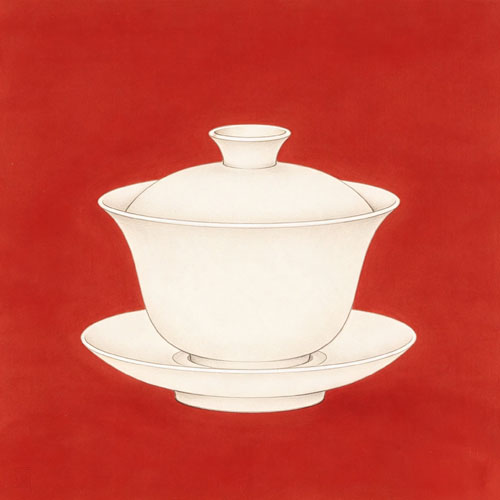
We have always said that the gaiwan can be anyone’s tool. It does not belong only to the tea master or the experienced practitioner. We use it because of its efficiency. It is simple, versatile, and makes the process of preparing tea easier.
At the same time, the gaiwan is one of the most elegant instruments in the world of tea.
There is beauty in the way we hold it, the way we pour, and the way we observe the leaves opening.
I would like to share another dimension of making tea—one that, throughout history, has often been understood by those fortunate enough to have access to exceptional sources.
Because knowing how to use a teapot or a gaiwan is only one part of the journey.
The other question is: what tea are we choosing to make?
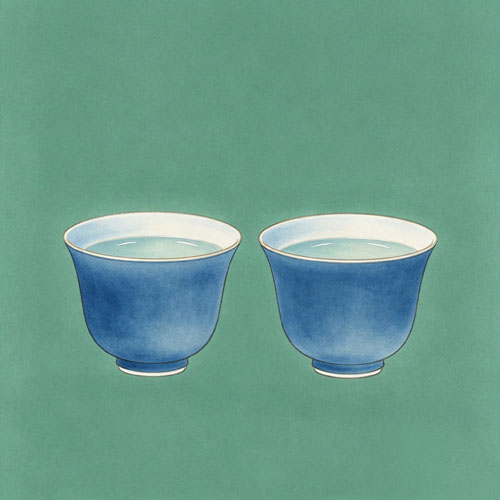
Imagine that someone offers you two cups of water.
One comes from an ordinary tap. The other comes from a sacred spring, or from a place that has been protected by nature for generations.
Both are water. Both can quench your thirst. Yet instinctively, we understand that where something comes from matters.
Water found in a sacred and protected environment is not experienced in the same way as water drawn from an ordinary tap. The same principle can apply to tea. Tea is not merely a collection of leaves.
Leaves growing in an extraordinary and protected natural environment may offer an experience fundamentally different from leaves cultivated purely as an industrial commodity.
And if the tea is different, then perhaps the tea ceremony itself can become different.
Today, we are busier than ever. We schedule meetings. We answer messages. We chase deadlines. We move from one responsibility to another.
And that is why I believe we should ask ourselves a more important question: if we are going to give our time to tea, what is that time worth? If we simply want to quench our thirst, almost anything can do the job. Water from a dispenser can quench our thirst without costing us anything.
Ordinary tea can warm our bodies and satisfy our thirst. There is nothing wrong with that. But tea can be more than thirst.
If we are seeking something beyond simply quenching our thirst, then perhaps the origin and integrity of the leaves matter more.
There is nothing wrong with producing tea to make money. Business is necessary. Farmers, workers, producers, and companies all deserve to earn a living from their work. Profit itself is not the problem.
But we also know that in the industrial world, efficiency can sometimes become more important than the integrity of the product.
Our time is valuable. Our attention is valuable. And the moments we reserve for ourselves may be among the most valuable things we possess. So why should we automatically spend those moments on something chosen only because it was cheap, convenient, or heavily marketed?
Exceptional tea from extraordinary origins may be more accessible than many people imagine.
The question is not simply: how much does the tea cost?
The deeper question is: what is your time worth?
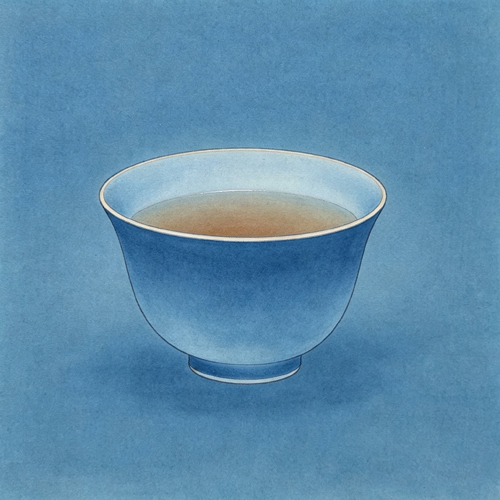
Imagine two tea cups. One is covered with elaborate paintings, bright colours, and showy designs. The other is simple. Perhaps almost too simple.
But the simple one comes from a great kiln, shaped by generations of mastery, understanding, and craftsmanship.
Which one would you rather discuss?
The elaborate decoration may immediately capture your attention. But sometimes decoration is designed to persuade us to look only at the surface. The beauty is loud because what lies beneath may be ordinary.
The simple cup from a great kiln is different. It does not need to shout. Its beauty is discovered slowly. Its value lies not merely in what we can see, but in the history, craftsmanship, material, and spirit behind it.
Perhaps tea is the same. The most extraordinary things do not always need elaborate packaging, dramatic stories, or excessive decoration.
Tea can be much more than a drink. Tea can be a powerful tool.
I once heard from a Korean professor about children with behavioural challenges who were taught the simple practice of serving tea. Through the act of preparing and serving tea, they learned something important. They learned dignity through giving.
Over time, some of these children grew into successful professionals, including lawyers, professors, and doctors. But the transformation was not simply about the tea. It was about what the act of serving tea created within them.
It taught responsibility. It taught awareness. It taught respect. It taught the children that they were capable of giving something meaningful to another human being. That is transformation.
Inspired by the same philosophy, we have also used the concept of tea to empower children through the simple act of preparing tea for their parents and elders, including in a programme presented through Esplanade.
Imagine the power of a child preparing tea for a parent. For that moment, the child is not asking. The child is giving. And in giving, something begins to change.
If all we need is something to quench our thirst, there are countless options. But if we are seeking something more, then the choice of tea may matter greatly.
A tea ceremony is not made meaningful simply because we use an expensive gaiwan. Nor is it made meaningful by complicated movements or beautiful decoration.
Our time is precious. That the things we choose to bring into our lives matter. So the simplest act of making tea can become something far greater than we imagined. Tea is not just about drinking.